
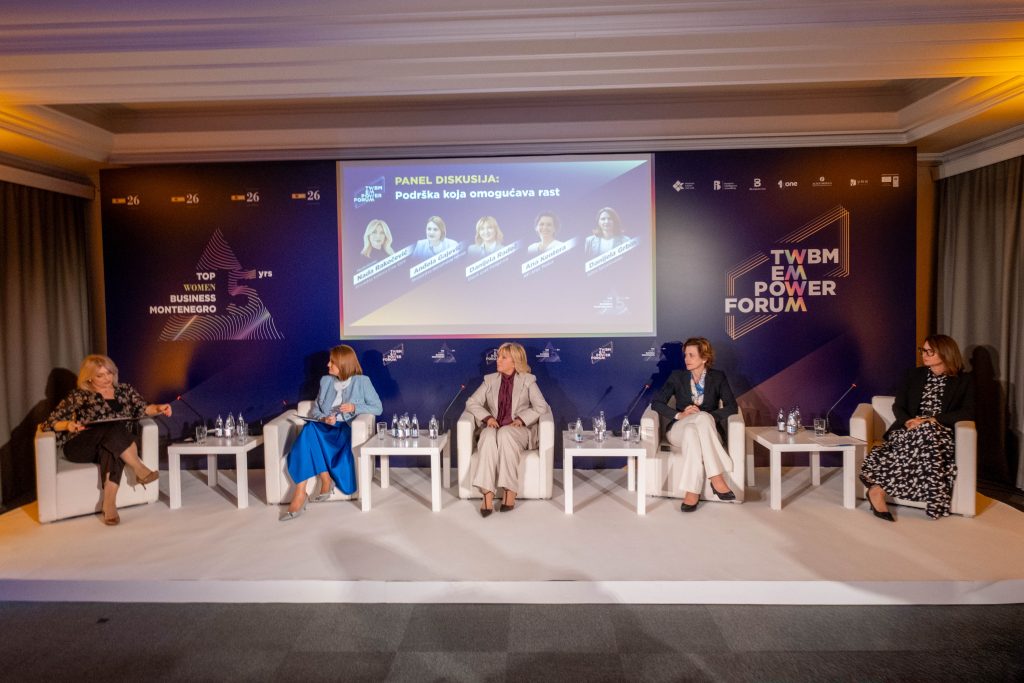

“As important as access to finance is, we cannot overlook the non-financial component, namely mentorship programmes. It must be a package of services available to women entrepreneurs,” Gajević emphasised.
She stressed that success should not be measured solely by numbers, such as the number of public calls and applicants, but by whether institutional support is timely and produces the desired results – in other words, whether it helps turn a business idea into a genuine business opportunity.
She identified three key areas for improvement: simplifying application procedures, reducing administrative barriers and establishing transparent eligibility criteria. She particularly highlighted the need for institutions to obtain documentation available through official channels themselves, thereby relieving entrepreneurs of unnecessary bureaucracy and allowing them more time to develop their businesses.
The extent to which demand exceeds available funding is illustrated by the fact that €600,000 was allocated to the development of women’s entrepreneurship this year, while the total value of submitted applications exceeded €1 million.
“This shows the extent to which we are unable to meet the needs of the business sector,” Gajević warned, adding that support should be viewed as an investment rather than an expense to the state budget, as investments in economic competitiveness generate returns many times over.

Danijela Radeč, Secretary of the Secretariat for Entrepreneurship and Investments of the Capital City of Podgorica, recalled that a dedicated funding scheme for women’s entrepreneurship was introduced in 2019, with an initial budget of just €20,000. Today, approximately half a million euros is available for this purpose.
“Through this scheme, we have supported 200 business ideas. We have restored the trust of people who turn to local government expecting some form of support,” Radeč said.
She believes that the next step is to improve the monitoring system so that institutions can track the progress of supported businesses and use these insights to plan future programmes more effectively. She particularly highlighted insufficient coordination among institutions and the need to avoid overlapping support for the same business plans.
“We should not be conducting police-style investigations. Instead, monitoring should provide us with an analysis that will enable us to design public calls for the following year in the best possible way,” Radeč stated.
She also noted that service-based activities dominate among submitted business ideas, emphasising that greater incentives should be directed towards manufacturing and production. She cited interviews with applicants as a valuable way of assessing a business’s true potential, explaining that conversations with women entrepreneurs often reveal far more than a business plan alone.

From the perspective of a financial institution, Ana Kentera, Executive Director of Alter Modus, addressed a common misconception about entrepreneurship – that a business begins with its formal registration.
“No business starts with registration. If someone has a business idea, they will not first go to the Central Register of Business Entities (CRPS) and register a company. That happens at a later stage of development. You start with small steps to see whether there is room in the market and whether there are clients and customers,” Kentera explained.
According to Kentera, financial institutions should recognise the stage of development a business has reached and offer appropriate financial products. She particularly emphasised the importance of specialised knowledge that supports business expansion, from improving internal organisation and product promotion to developing sales channels.
“A business must develop internally in order to expand into the market it aims to serve. Its organisation and product promotion must evolve, and its sales channels must be improved. These are specialised skills that need to be developed through mentorship or advisory support,” Kentera said.
She stressed that financing is not the only obstacle women face. It is equally important to better understand their needs and tailor financial products accordingly.
“Women account for 37.7% of clients in Alter Modus’s loan portfolio when it comes to micro and small enterprises. It is not that women-owned businesses cannot be financed, nor that women are uninterested in investing. We need to reach out to them and meet their needs,” Kentera stated.
Preparing women entrepreneurs to access European funds will represent a particular challenge in the coming period. Danijela Grbin, Executive Director of Adria Savjetovanje, warned that access to the European Union market will create significant opportunities but also increase competition, making it essential for micro, small and medium-sized enterprises to prepare for new business conditions in a timely manner.
In her assessment, women’s entrepreneurship particularly needs to be strengthened in terms of investment and business expansion, as women are often more cautious when it comes to taking financial risks.
She identified the period between the approval of a European grant and the first reimbursement of funds as one of the significant obstacles. Women entrepreneurs must initially secure the funds needed to implement their projects and maintain business liquidity, which can be particularly demanding for smaller companies. For this reason, Grbin believes that the government, banks, the Development Bank and microcredit institutions should already be developing financing models that will enable businesses to bridge this period.
She warned that preparation for European funding calls should not begin only once they are announced. Instead, women entrepreneurs should already be planning their development, ensuring sound financial management and tax compliance, defining projects and identifying potential partnerships.
“I recommend that women, despite being heavily occupied with day-to-day business operations, set aside time to create a roadmap and define where they see themselves in 2030. Put your tax compliance and finances in order, focus on developing two or three projects, and prepare the necessary documentation. Once you have done that, you will be 50% ready for the calls that will be announced,” Grbin concluded.

