
BI Consulting Analysis Shows Growth in Women’s Entrepreneurship for the Third Consecutive Year
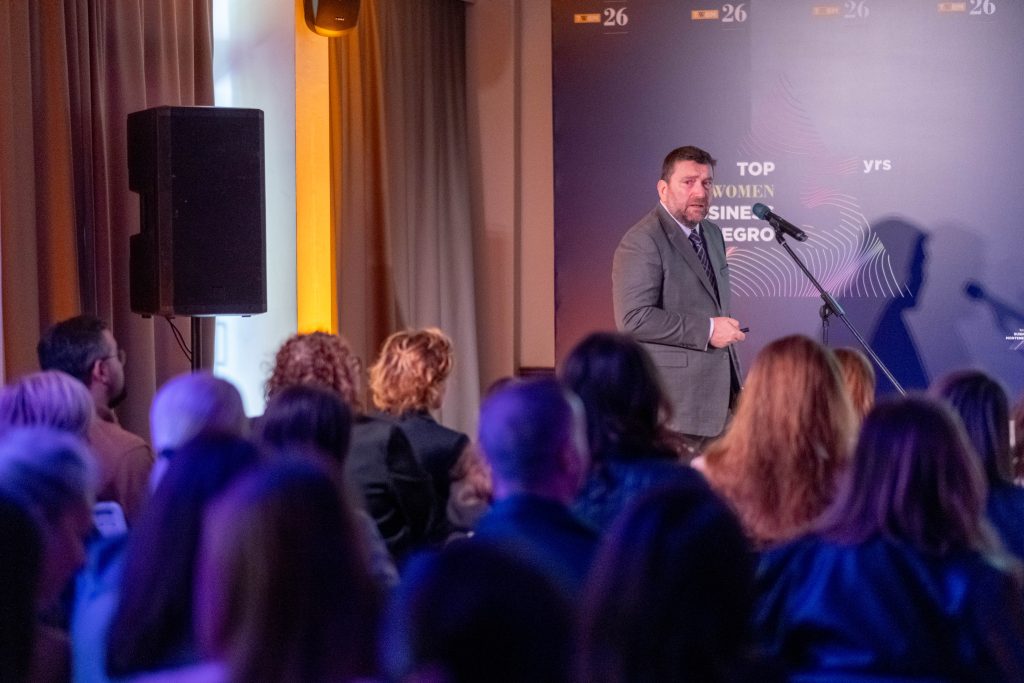
Nikolić: Women Run Nearly One-Third of Companies but Generate Less Than One-Fifth of Total Revenue
Women’s entrepreneurship in Montenegro has recorded growth for the third consecutive year. However, the increase in the number of women-owned and women-led businesses has yet to be matched by their share of total revenue and employment, according to an analysis presented by Ratko Nikolić, Chief Analyst at BI Consulting, at the TWBM Empower Forum 2026, titled “From Visibility to Concrete Support for Women in Business,” held in Podgorica and organized by Top Women Business Montenegro (TWBM).
According to the data presented by Nikolić, of the 35,744 registered companies in Montenegro in 2025, 10,152 were either owned or managed by women. This represents an increase of 9.01% compared to 2024. Women-owned and women-led companies accounted for 28.33% of all registered businesses. Of these, 7,182 were owned by women, while 2,970 were managed by women.
“We have recorded growth for the third consecutive year, which means we can now speak of a well-established trend. We are approaching the point where women-owned and women-led businesses account for one-third of all registered companies in Montenegro,” Nikolić stated.
However, a greater number of businesses does not necessarily translate into equal economic strength. Women-owned and women-led companies accounted for 17.67% of total revenue, which, according to Nikolić, indicates that women remain predominantly represented in micro and small businesses.
A similar situation can be observed in the labor market. The share of employees working in women-owned and women-led companies declined slightly from 20.67% to 20.13%. However, Nikolić believes this should not be interpreted as an indication of a negative trend, considering the growth recorded in this indicator over previous years.
Trade Leads the Way, with Podgorica as the Business Hub
The structure of women’s entrepreneurship shows that trade remains the most represented sector, with 2,313 companies owned or managed by women operating in this field in 2025. Professional, scientific and technical activities also account for a significant share, with 1,808 companies, followed by accommodation and food services with 1,018 companies, and other service activities with 821 companies.
The geographical distribution reveals a strong concentration of business activity in the central part of the country. Podgorica is home to 3,567 women-owned and women-led companies, representing approximately 35% of the total. The central region accounts for 4,632 such companies, while 4,510 are registered in the southern region.
“In the northern region, there are 1,010 such companies, representing a slight decrease of 0.19% compared to 2024,” Nikolić said, noting that this figure reflects the overall trend in the total number of businesses in northern Montenegro.
Commenting on the effects of existing support measures, Nikolić assessed that three consecutive years of growth indicate certain positive developments. However, he emphasized that the question remains whether the current support models are sufficient or require further improvement.
Nikolić also noted that the ongoing process of reviewing and updating the Central Register of Business Entities, in accordance with the new Law on Business Organizations, could provide a more accurate picture of the number of active businesses in the next report.
“We will have more precise data than we do now, given the current state of the register. We hope and believe that the figures will show a higher number of active women-owned and women-led businesses,” Nikolić said.
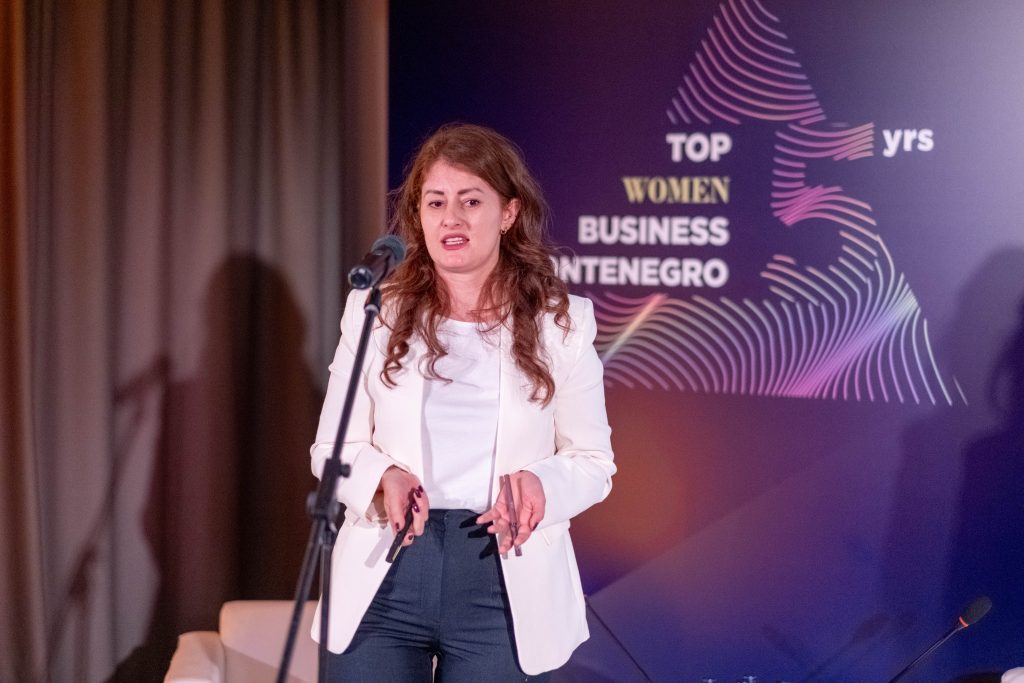
UNDP Analysis: Barriers Arise Long Before Women Approach a Bank
While BI Consulting’s analysis examines the scale, structure and economic position of women-owned and women-led businesses in Montenegro, research conducted by the United Nations Development Programme (UNDP) focuses on barriers within the entrepreneurial ecosystem, access to finance, social norms and opportunities for women’s business development.
The preliminary findings of the gender analysis of the entrepreneurial ecosystem were presented by Bojana Tomović, Project Analyst with UNDP’s Gender Equality Cluster. The research covers 300 companies across six Western Balkan economies and includes a survey of approximately 1,000 citizens aged 15 to 65.
Tomović stated that, according to the findings presented, Montenegro has the highest female labor force participation rate in the region, at approximately 57.7%, but also the largest gender pay gap.
The research shows that women-owned businesses are, on average, younger and smaller than those owned by men. The average age of women-owned companies is 10.2 years, compared to 17.7 years for male-owned companies.
Women are more likely to own microenterprises, while also being more likely to employ other women. Although businesses report growth, increases in employee numbers are more pronounced among male-owned companies.
Tomović pointed out that one explanation may lie in the way women-owned businesses are organized, with female entrepreneurs often taking on multiple responsibilities simultaneously, including accounting, planning, marketing and other business functions. According to Tomović, this pattern is also linked to gender expectations that women should perform multiple tasks at once, an expectation that carries over into the organization of their businesses.
The research also found that only 33% of the surveyed women-owned businesses in Montenegro had applied for a loan. None of these applications were rejected, but none of the businesses had used credit lines specifically designed for women entrepreneurs.
“Women are discouraged from starting a business long before they reach a bank’s loan officer and face the possibility of rejection,” Tomović said.
While men more frequently identify unfavorable lending conditions and strict collateral requirements as obstacles, women point to the lack of financial products specifically tailored to their businesses, as well as the perception that women-owned businesses are considered riskier.
The importance of care services, such as kindergartens, support for elderly care and extended school-day programs for children, as measures that could help women start and develop businesses, was highlighted by 12% of surveyed companies, 63% of experts and 82% of surveyed citizens across the region.
Tomović concluded that social norms represent one of the key barriers to women’s entrepreneurship. For this reason, support should not be limited to training and financial incentives but should also address the broader conditions that enable women to maintain business continuity.

